
Manufacturing
Surface Finishes for Metal Corporate Gifts: Brushed, Anodised, PVD, and What Each Actually Survives
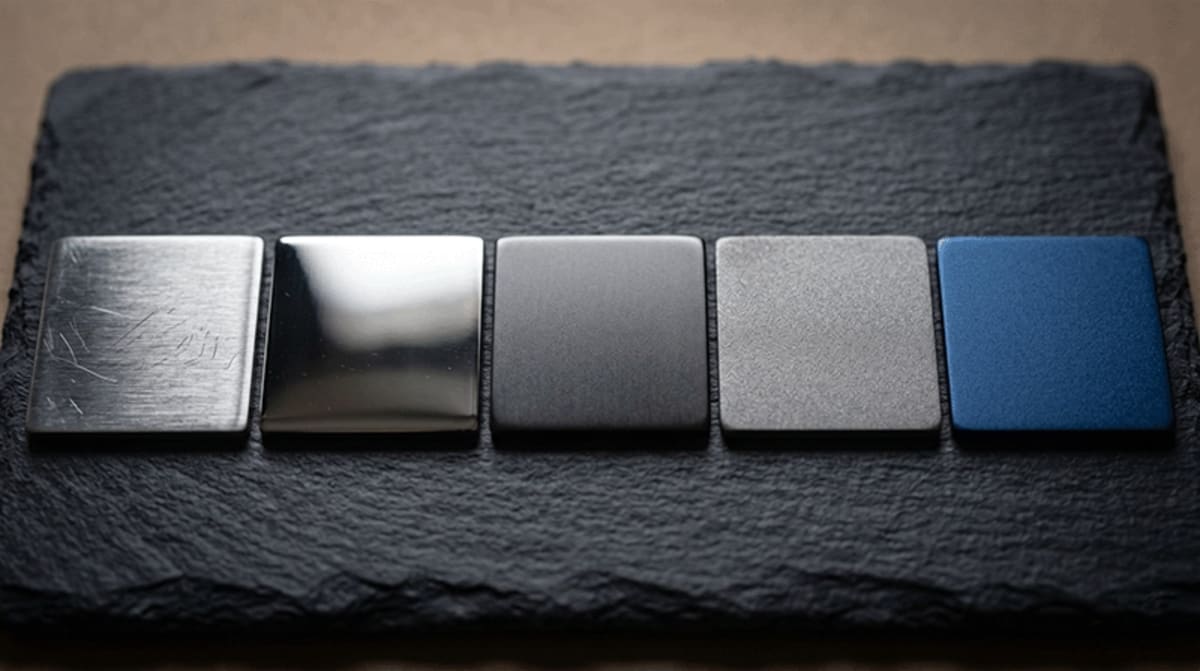
Wischos Gift
Quick Answer
Brushed and matte finishes are the most forgiving for daily-carry gifts — they hide micro-scratches and age well. Anodised aluminum gives the widest colour range with permanent colour. PVD coating on steel delivers the most durable dark finish. Mirror polish looks exceptional in photos but shows wear quickly under regular handling.
When buyers review a metal corporate gift, their hands register the surface finish before their eyes process the design. That immediate tactile impression — the drag of brushed grain under a thumb, the chill of mirror-polished steel, the matte grip of a sandblasted surface — is set at the factory, usually weeks before you see a sample photo.
Surface finish is also a downstream decision: it determines how your laser-engraved logo reads, how the product handles fingerprints after six months of daily pocketing, and whether the gift still looks considered at the eighteen-month mark. Getting it right means understanding what each finish is made of and what it can actually withstand — not just what it looks like in a product render.
Here is how the main finishes used in premium metal corporate gifts actually behave in practice.
Brushed Finish — The Most Forgiving Default
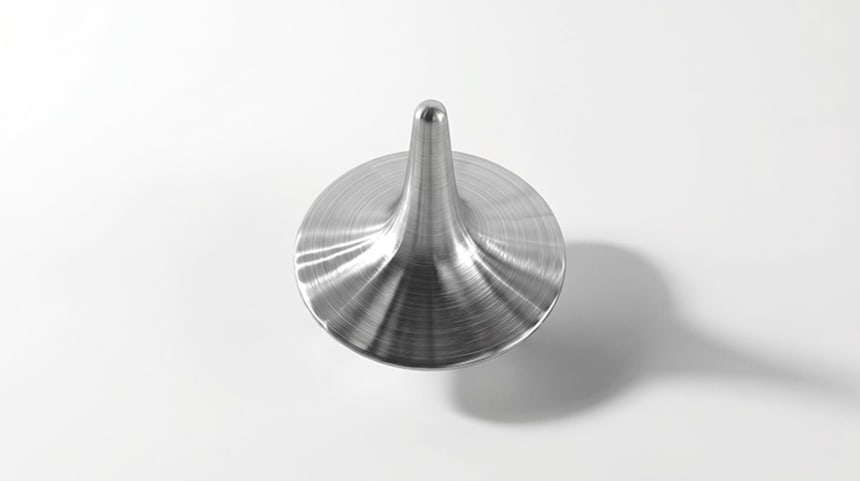
A brushed finish is created by drawing fine abrasive media across the metal surface in a single direction, leaving a uniform linear grain. It is the most commonly specified finish in premium corporate gifting — and for good reason.
The directional grain camouflages micro-scratches: as they accumulate from daily handling, they align with the existing texture rather than standing out against it. A brushed stainless steel pen carried in a bag every day for a year looks essentially the same as it did in month one. The same pen in a mirror-polish finish shows its first hairline scratch within weeks.
- Works on: Stainless steel, aluminum, titanium, brass
- Laser engraving result: High contrast, very clean — one of the best surfaces for logo engraving
- Best for: Writing instruments, daily-carry tools, key organisers — anything carried daily
- Limitation: The directional grain reads lighter or darker depending on lighting angle — worth noting for photography-heavy programmes
Mirror Polish — High Impact, High Maintenance
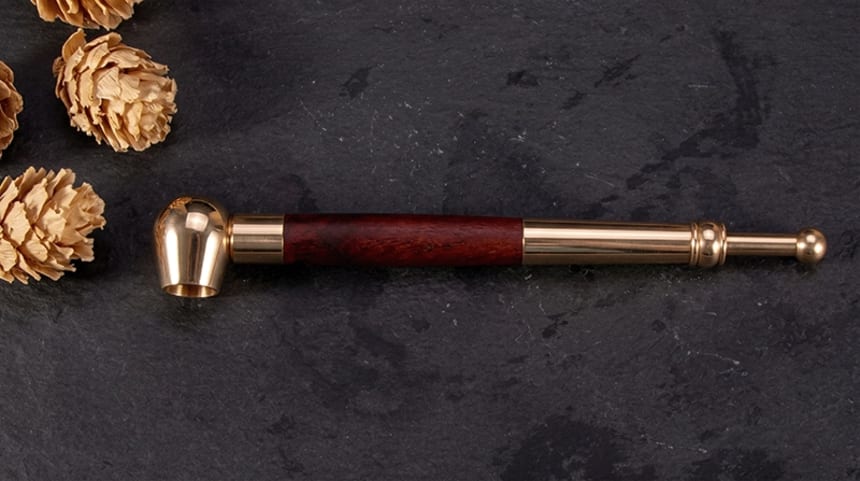
Mirror polish is achieved through multiple stages of progressively finer abrasives, finishing with a buffing compound. The result is a surface that reflects clearly — exceptional in photographs and commanding on a desk.
The trade-off is maintenance. Mirror surfaces show fingerprints immediately and accumulate micro-scratches visibly from the first week of handling. A mirror-polished pen in someone's pocket for three months will develop a noticeable surface haze that no amount of wiping fully removes.
- Best for: Display pieces and desk objects with limited daily handling — decorative tops, paperweights, objects that sit rather than travel
- Not recommended for: Daily-carry items, drinkware, anything pocketed regularly
- Laser engraving result: Dramatic contrast, but the polished surround collects fingerprints around the engraved area — this can undermine the effect over time
Anodising — The Aluminum Colour Specialist
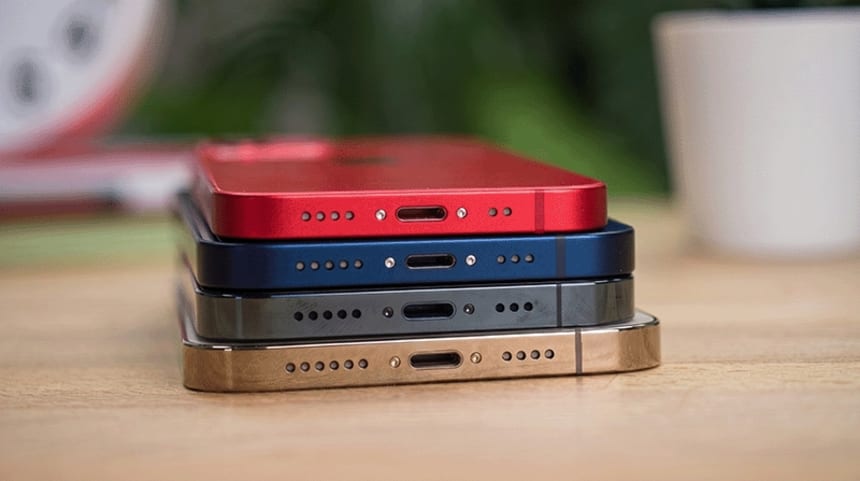
Anodising is an electrochemical process exclusive to aluminum. The surface is converted into aluminum oxide (Al₂O₃) — not a coating applied on top of the metal, but a structural transformation of the surface itself. Dye is absorbed into the porous oxide layer before it is sealed.
Because the colour is embedded in the metal oxide rather than sitting on it, anodised finishes do not chip, peel, or scratch off the way painted or plated surfaces do. The colour is permanent under normal use conditions. The range is broad — matte black, space grey, champagne, midnight blue, deep red — and can be closely matched to brand palettes, though exact Pantone reproduction is not possible.
- Works on: Aluminum only
- Laser engraving result: Exceptional — the laser ablates the coloured oxide layer to reveal bright silver aluminum beneath, producing very high contrast
- Best for: Desk accessories, branded pens in brand colours, tech-adjacent gifts where a modern colour palette matters
- Limitation: Aluminum only. Anodised surfaces can be scratched through to base metal under hard abrasion — more durable than paint, less so than PVD
PVD Coating — The Premium Dark Tier
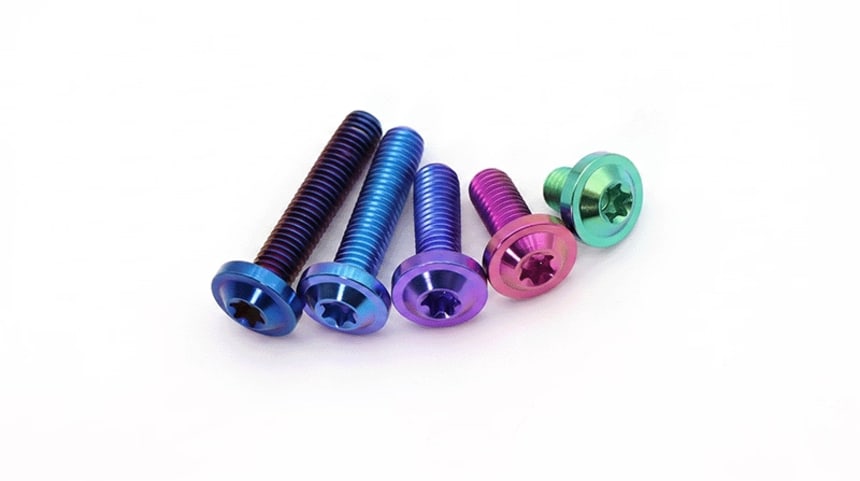
PVD (Physical Vapor Deposition) is a vacuum-chamber process in which target metals — typically titanium nitride (TiN), chromium nitride (CrN), or zirconium nitride (ZrN) — are vaporised and deposited as an ultra-thin film, typically 2–5 microns thick. The resulting surface is not a paint layer; it is a bonded metallic compound with a hardness that often exceeds the substrate beneath it.
In practical terms: PVD black on a stainless steel pen is significantly harder than the steel itself. Under the daily abrasion that would visibly wear conventional dark paint within months, a quality PVD coating remains essentially unchanged. The colour palette is narrower than anodising — black, gunmetal, dark grey, and warm gold are the production-viable options — but these happen to be precisely the tones driving the current preference in executive corporate gifting.
- Works on: Stainless steel, titanium, most ferrous metals
- Laser engraving result: Clean contrast — the silver-grey of the exposed steel reads clearly against a dark PVD background
- Best for: Executive tier gifts, premium writing instruments, daily-carry tools where a sophisticated dark aesthetic is the brief
- Limitation: Adds 15–30% to unit cost versus brushed steel. Longer production lead time. Less suitable for complex curved geometries where film adhesion can be uneven
Matte / Sandblasted Finish — Clean and Contemporary
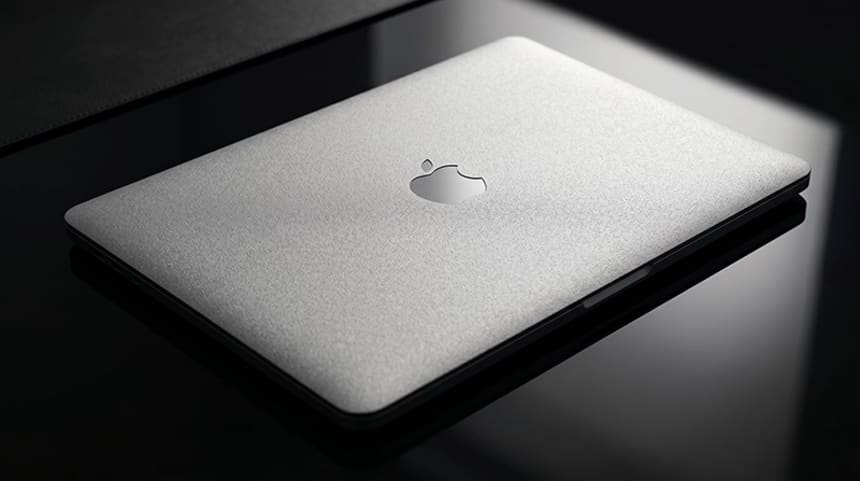
A sandblasted or bead-blasted finish is produced by propelling fine abrasive media — glass beads or aluminum oxide — at controlled pressure across the metal surface. Unlike brushed, the result is non-directional: the texture is uniform regardless of viewing angle.
Matte surfaces diffuse light rather than reflecting it, which makes them inherently fingerprint-resistant. They hold up well under daily handling and have a tactile warmth that mirror polish lacks. In consumer hardware, matte has become the dominant signal for premium tech products — and that aesthetic preference is crossing into corporate gifting briefs with increasing regularity.
- Works on: Steel, aluminum, titanium, brass
- Laser engraving result: Excellent on titanium — laser oxidation creates a dark mark against the light matte surface with strong contrast; good on steel
- Best for: Modern, understated aesthetics; titanium drinkware; products where tactile quality matters alongside visual restraint
- Limitation: Non-directional texture can read as slightly industrial in certain contexts — not the choice when the brief calls for "refined desk presence"
Stone Wash — The Titanium Daily-Carry Finish
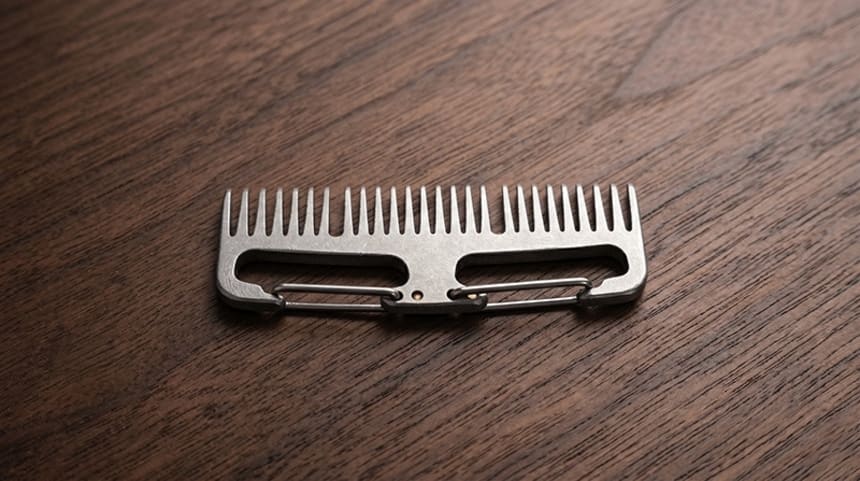
Of the five finishes above, most apply across stainless steel, aluminum, and titanium. Titanium has one additional process worth knowing for daily-carry products: stone washing.
A stone washed finish is produced by tumbling the titanium piece in a drum with abrasive media — typically ceramic or stone pellets — until the surface develops a uniformly worn, low-gloss appearance. This is a deliberate ageing treatment. The result is a finish that looks and feels broken-in from the first day, and absorbs further wear invisibly: scratches from daily pocket carry blend into the existing texture rather than standing out against it. For titanium daily-carry tools where longevity under hard use is the brief, stone wash outperforms standard matte sandblasting because the surface is already pre-textured for wear.
- Works on: Titanium (occasionally used on steel knives and tools)
- Best for: Titanium daily-carry accessories, clip tools, bottle openers — any titanium piece that will see hard daily use
- Note: Each piece has slight tonal variation — consistent with the process, not a defect. Acceptable for programmes where a crafted, worn-in character is part of the brief
Choosing Based on Use Context
The right finish is determined by two questions: how will this be used, and what impression needs to land at first contact?
| Use scenario | Recommended | Avoid |
|---|---|---|
| Daily carry (pocket, bag) | Brushed or Matte | Mirror polish |
| Executive desk display | Mirror polish or PVD | — |
| Brand colour matching required | Anodised (aluminum only) | Mirror polish |
| Dark / stealth aesthetic | PVD black or gunmetal | Anodised (aluminum-only limit) |
| High-volume, cost-sensitive programme | Brushed stainless | PVD (cost premium) |
| Titanium products | Matte / sandblasted | Mirror polish (difficult on Ti) |
One practical note: laser engraving results vary significantly across these finishes. If logo clarity matters — and it usually does — specifying the surface finish in the same conversation as the branding method avoids an unnecessary sampling round. Our guide on laser engraving vs. colour printing covers the logo side of this decision in detail.
Frequently Asked Questions
Which metal surface finish is most durable for corporate gifts?
For daily-carry items, brushed and matte finishes are the most forgiving — the directional or non-directional grain absorbs micro-scratches invisibly. PVD coating on steel offers the highest hardness for dark-finish applications. Mirror polish is least appropriate for any item handled or pocketed regularly.
Does anodising work on all metals?
No. Anodising is an electrochemical process exclusive to aluminum. It converts the surface to aluminum oxide, embedding colour permanently into the metal structure. For steel, titanium, or brass, alternative processes — PVD, brushed finish, or matte sandblasting — are used instead.
Which surface finish produces the best laser engraving results?
Brushed finish and anodised aluminum both produce excellent laser engraving. On brushed steel, the contrast between raw metal and directional grain is sharp and legible. On anodised aluminum, the laser ablates the colour layer to reveal bright silver beneath — very high contrast. Mirror polish produces dramatic results but the surrounding area collects fingerprints over time.
Is PVD coating worth the extra cost for corporate gifts?
For executive-tier items where a dark, sophisticated aesthetic is the brief, yes. PVD adds roughly 15–30% to unit cost versus brushed steel, but delivers a surface hardness that exceeds the substrate — the black or gunmetal finish holds up under daily use that would visibly wear conventional paint within months.
When you brief us, specifying surface finish requirements upfront reduces sampling rounds. If you're unsure which finish suits the application, tell us the use context and recipient profile — send a brief and we'll recommend the finish that holds up best for that specific programme.
More Articles
Ready to order?
Browse the Catalogue or Send a Brief
Curated metal products and gift set concepts for B2B programs. Custom branding, packaging, and sourcing support available.